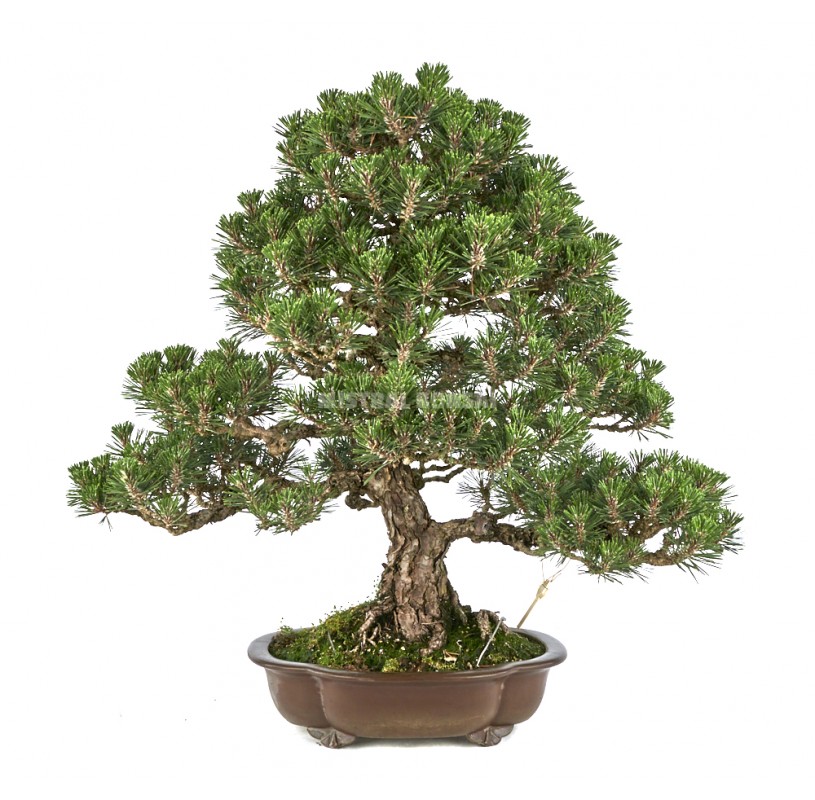
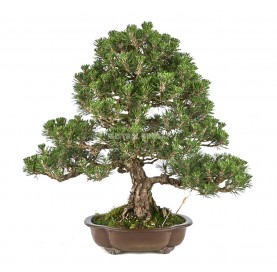
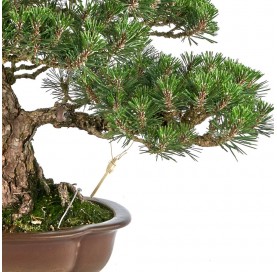
This Bonsai Specimen of Pinus thunbergii ‘Kotobuki’, styled in Moyogi, stands out for its mature bark, harmonious silhouette and classical strength. A compact and elegant tree for collectors of Japanese conifers.
Due to its volume, this product requires a shipment by a specialised agency. Free delivery is not available for this product.

Find answers to the most frequent questions with our technical team.

Check where we ship and conditions here

The VAT corresponding to the country of destination will be applied.
This Bonsai Specimen of Pinus thunbergii ‘Kotobuki’ has been shaped in the Moyogi (informal upright) style, with a well-aged trunk and evenly tiered branching. Its structure evokes the classic form of Japanese pines found on mountain slopes, radiating strength, balance and elegance. Cultivated outdoors and of Japanese origin.
Habitat: Outdoor
Origin: Japan
Style: Moyogi (informal upright)
Approximate nebari diameter: 17 cm
Pot type: Stoneware
Approximate pot size: 32 x 30 x 8 cm
Approximate bonsai dimensions (including pot): 67 x 71 x 55 cm
The Bonsai Specimen section includes only trees that meet a series of qualities that make them exceptional: high aesthetic value, artistic formation, size, rare species, author's work, specific training techniques, dynamism, age or expressive power.
Note: The images and measurements shown in the Bonsai Specimen section correspond to the actual item you will receive. As a living being, its appearance may vary with the seasons. All dimensions include the pot.
Pinaceae
Spring and autumn. It’s preferable to use organic fertilizers which favour and preserve the mycorrhizae.
Every 3 years, at the moment of budding and before the opening of the needles within the buds. In our Mediterranean zone this is in the middle of March.
100% Kiryuzuna, or mixed with 50-70% of Akadama.
To be done in the coldest months of the year. Leave needles and leaf buds on the branches otherwise they will dry.
As needles appear, pinch back overgrown shoots. In the growing season, remove long main shoots, trim one-third to half of this year’s new candles.. In late summer or early autumn, remove old needles and crowded twigs to let in light.
From October to March. It’s recommended to use copper wire because pines are very flexible trees and the wire has to remain for a long time on the tree.

No customer reviews for the moment.
This Bonsai Specimen of Pinus thunbergii ‘Kotobuki’, styled in Moyogi, stands out for its mature bark, harmonious silhouette and classical strength. A compact and elegant tree for collectors of Japanese conifers.
Due to its volume, this product requires a shipment by a specialised agency. Free delivery is not available for this product.